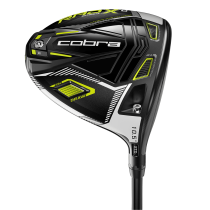



Find Second Hand Cobra Golf Drivers
Book your Club Trial & Fitting Session : Book now
 30 Day Try Before You Buy Guarantee
 Order by 12pm for next working day delivery
 Authenticity Guaranteed
Buying used gives you access to Cobra’s previous flagship drivers without paying their original launch prices. Keeping an open mind about generation can leave more of your budget for the specification that matters: a suitable head, enough loft and a shaft you can swing comfortably.
Cobra’s range includes options for golfers seeking lower spin, greater stability or help with a slice. Buying second hand lets you compare those different designs across several generations, rather than choosing whichever version of the newest driver falls within budget.
Many Cobra drivers allow changes to loft and, depending on the model, weight position or lie angle. Once you have a suitable head and shaft, these adjustments give you scope to refine the flight as you learn what works.
A used driver should be judged on the actual club you receive. Our inspections, condition grades and 30 day returns help you compare the available examples and find out whether your chosen Cobra improves your driving.
Every used Cobra driver listed on Nearly New Golf Clubs is inspected before it goes live on the website. That means you can compare condition and specification more clearly when choosing a driver.
Each Cobra driver is reviewed before being uploaded to the website. The head, face, shaft and grip are checked, along with adjustable components where fitted, so the listing reflects the club’s condition as clearly as possible.
We grade every used Cobra driver so you know what to expect before you buy. Whether a club is mint, very good or good, the aim is to make condition easy to understand before it reaches your bag.
Compare Cobra model, generation, loft, shaft model, flex, condition and price. Check the actual listing, because the same head can play differently with another shaft or setting.
Order by 12pm and we will aim to dispatch your Cobra driver quickly, so you can get it into play as soon as possible.
You need to feel comfortable with the club off the tee. That is why we offer 30 day returns, giving you time to make sure your Cobra driver suits your game.
Cobra’s used prices overlap across generations. Your budget might cover an older driver in excellent condition, a newer head with more cosmetic wear, or several different shaft options. Start with the flight you need, then compare what the extra money actually buys.
This is a useful starting point for a first driver, a replacement for a basic starter-set club or an inexpensive change of specification. Models such as the King F6, F7 and F8, along with selected RADSPEED examples, can fall within this bracket.
Prioritise suitable loft, manageable shaft weight and a grip you can use comfortably. If you struggle to launch your current driver, a higher-lofted older Cobra may be a more useful purchase than a newer low-loft head.
Check the complete cost before choosing the cheapest listing. A driver that needs a different shaft or a change of grip size may cost more overall than a slightly dearer club already built close to your requirements.
This bracket can bring Speedzone, Aerojet LS and selected DarkSpeed LS or MAX drivers into consideration. That creates a meaningful choice between different head types, rather than simply between old and new.
For example, an attractively priced LS model deserves consideration if you need to reduce spin. If your main problem is inconsistent contact or a slice, compare it with a suitable MAX version before committing.
Look closely at the shaft included in each listing. Two drivers at the same price can be very different purchases if one has a comfortable regular-flex build and the other has a heavier extra-stiff shaft. The best value is the one you can use effectively without immediately rebuilding it.
DarkSpeed X and selected DS-ADAPT X, LS and MAX-D examples can sit within this range. You may therefore have access to a newer adjustment system without needing to buy Cobra’s newest generation.
This is where it helps to make a precise shortlist. Compare the same broad head role, a similar loft and shafts of a suitable weight before assessing condition and price.
If a lower-priced DarkSpeed already produces the carry and control you need, spending the full £300 is optional. Paying more makes sense when it secures a better-fitting build, a condition grade you prefer or adjustment options you will use.
More recent models, including selected OPTM drivers, can appear above £300. At this level, be specific about why you are spending more.
A particular shaft, preferred head shape or cleaner condition may justify the difference. Recency alone is a weaker reason if a less expensive Cobra gives you equally useful results.
Compare the final shortlist against your current driver. Look for improvements in ordinary carry, playable misses and confidence over several sessions. One exceptional drive is not enough to establish that the more expensive option is the better purchase.
Across every budget, confirm any included headcover or adjustment tool and check our delivery information when comparing the total cost.
The name after the driver family helps explain its intended role, but Cobra’s naming changes between generations.
| Head designation | Broad purpose | What to check when buying |
| LS | Lower-spin performance | Whether you retain enough launch and carry, particularly on imperfect strikes. |
| X | A balance of speed and forgiveness in ranges such as DarkSpeed, DS-ADAPT and OPTM | Whether it gives you useful all-round performance without needing a more specialised head. |
| MAX | Forgiveness and, in models such as DarkSpeed MAX, adjustable draw assistance | The exact generation and available weight positions. |
| MAX-K | Stability and forgiveness in DS-ADAPT and OPTM | Whether it improves your pattern across the face. |
| MAX-D | Draw-biased performance in DS-ADAPT and OPTM | Whether it reduces your slice without introducing an unwanted opposite miss. |
These are starting points for comparison. The head, loft, shaft and your delivery work together to produce the actual flight.
Aerojet drivers and DarkSpeed drivers offer several routes into Cobra’s used range. Both families include LS and MAX options, so compare the specific versions before deciding which generation represents better value.
Aerojet LS versus DarkSpeed LS is a useful generational comparison. Aerojet LS versus DarkSpeed MAX is primarily a decision about the type of driver you need.
If the older club gives you a suitable flight with a comfortable shaft, the newer badge alone is not a compelling reason to spend more. Compare condition, included accessories and the quality of your ordinary drives.
DS-ADAPT drivers and OPTM drivers both use Cobra’s FutureFit33 adjustment system. Buying OPTM is therefore not the only way to access its wider range of loft and lie settings.
Compare equivalent versions first, then assess how the individual club sits behind the ball and performs in your hands.
Even matching suffixes do not guarantee identical dimensions. For example, DS-ADAPT LS has a 445cc head, while OPTM LS is listed at 460cc. If you prefer a particular shape or footprint at address, look beyond the letters on the sole.
Keep King F9, Speedzone, RADSPEED and LTDx on your shortlist when suitable examples are available. An older driver does not become unsuitable simply because Cobra has released another generation.
The important question is whether the available club solves your problem. A familiar shaft, comfortable playing length and predictable flight can make an older model a sensible purchase.
Check the full model name. “King Cobra” covers many different drivers, while names such as LTD and LTDx identify different generations.
Cobra’s AIR-X Offset takes a different approach from the heavier, adjustable performance models. Its lightweight head, shaft and grip are designed to help golfers with smoother tempos, while offset and heel weighting provide draw assistance.
It is worth considering if your current driver feels tiring or difficult to swing freely. Compare the complete club’s weight and feel, rather than choosing solely from the flex label.
A lightweight build and a draw-biased head address different needs. Decide whether your main difficulty is generating comfortable speed, controlling curvature or both.
Aerojet and DarkSpeed use MyFly adjustment, while DS-ADAPT and OPTM use FutureFit33. FutureFit33 offers 33 unique loft and lie combinations, with adjustment extending up to two degrees in either direction.
For a used buyer, the practical questions are:
Do not assume that a shaft advertised as “Cobra compatible” fits every generation. Use the adjustment chart for the exact model and handedness, and record your starting setting before making changes.
Start with the flight your current driver produces. If well-struck shots fly too low and struggle to carry, compare more loft before automatically choosing a lower-spin head.
For shafts, look at the model, weight and playing length alongside flex. A “stiff” label does not tell you how the complete club will feel.
Playing length deserves particular attention when buying used. Ask whether a club has been shortened or extended if the listing does not make that clear. The specification of the club for sale matters more than the standard specification from its original launch.
Tour Length identifies a shorter factory build, rather than a driver reserved for tour players. For example, Cobra lists the OPTM X Tour Length at 44.5 inches, one inch shorter than its standard counterpart, with heavier head weighting to maintain the intended balance.
A shorter build is worth testing if you struggle to find the centre of the face. Compare strike consistency and carry together: an easier-to-control club is useful only if it produces the overall result you need.
When buying used, distinguish a factory Tour Length model from a standard driver that has simply had its shaft cut down. Ask about the finished length and head weighting.
Cobra’s KING TEC Mini offers a more compact head and shorter build than a conventional driver. Cobra specifies 13.5° loft and a 43.75-inch playing length for the standard model.
It may interest golfers looking for an alternative tee club, but decide whether it would replace your driver or sit alongside it.
If another club already produces the same distance and flight more consistently, the mini may duplicate an existing job. Compare our used mini drivers if you have a clear gap to fill.
Compare drivers designed to solve the same problem. A low-spin Cobra and a draw-biased alternative can produce different results for reasons that have little to do with the brand.
Both are designed with stability and forgiveness as priorities, making them relevant comparisons if inconsistent contact is your main concern. Cobra’s FutureFit33 provides a different range of fitting adjustments from Ping’s hosel system.
Compare suitable examples among our used Ping drivers. Focus on carry lost from ordinary mishits, the spread of your shots and how confidently you aim each head. Keep loft and shaft specifications reasonably comparable before drawing conclusions.
These are useful options to compare when a slice is driving the purchase. DarkSpeed MAX uses interchangeable back and heel weights to alter the balance between forgiveness and draw assistance, while Callaway’s Ai Smoke MAX D is a dedicated draw-biased model.
Browse our used Callaway drivers and compare the resulting shot patterns. Record where the ball starts and how much it curves. For a right-handed golfer, reducing a right miss is useful, but replacing it with a damaging left miss is not an improvement.
Our 30 Day Try Before You Buy Guarantee gives you time to try your used driver on the range or course, subject to the guarantee terms. Use that opportunity to assess the shots you actually need to hit.
Warm up, then alternate small groups of shots between your current driver and the Cobra. Use the same type of ball, target and tee height where practical. Comparing clubs within the same session helps limit differences caused by weather, fatigue or how you are swinging that day.
Keep heel and toe strikes in the comparison. Record typical carry and the width of your shot pattern, rather than keeping only the longest drives.
Without a launch monitor, choose a realistic fairway-width target and note how often each driver leaves a playable next shot.
Photograph the original hosel and weight positions. Test one change before making another, using the manufacturer’s instructions and the correct tool.
If you change loft, weight position and shaft together, it becomes difficult to identify what helped.
Use tee shots where you know your usual result. Does the Cobra help you carry a hazard, avoid your common trouble or leave a more predictable approach?
Choose the driver you trust across a round, including the swings that are less than perfect.
Read the photographs and condition details for the individual club. Our condition guide explains the separate grades used for heads, shafts and grips, helping you distinguish cosmetic wear from the parts you will notice when playing.
For a used Cobra driver, look at crown marks, face and sole wear, grip condition and the stated shaft specification. On adjustable models, confirm the fitted components and any included accessories.
If appearance at address matters to you, pay particular attention to the crown photographs. A mark that barely affects one buyer’s decision may be distracting to another.
Browse the used Cobra drivers above to compare current models, specifications and condition. You can also explore our ladies drivers and left-handed drivers for other available builds.
If you need help choosing the right loft, shaft or club type, book an online golf club consultation.
Replacing an existing club? You can sell your golf clubs to Nearly New Golf Clubs.
We offer a 30 day money back guarantee on all used clubs, meaning you can try before you buy.
We offer a next working day delivery service. Place your order by 12pm and we'll deliver it then next working day.
The authenticity of our products are verified by our professional team before we bring them into stock.