



Find Quality Second Hand Ping Golf Drivers
Book your Club Trial & Fitting Session : Book now
 30 Day Try Before You Buy Guarantee
 Order by 12pm for next working day delivery
 Authenticity Guaranteed
RRP: £449.00
View details
RRP: £449.00
View details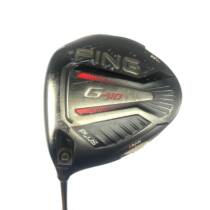
RRP: £449.00
View details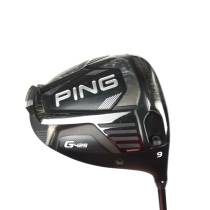
RRP: £449.00
View detailsBuying second hand makes Ping’s forgiving driver designs accessible across more budgets. You can compare an earlier G-series model with a newer MAX head and decide whether the additional spending improves your game. Look for useful carry and manageable misses across a round, especially when your contact is less consistent.
Ping’s different head options give you more control over what you buy. MAX provides a starting point for forgiveness, SFT offers draw help, and LST targets lower spin. Choosing the appropriate design can be more useful than moving to a newer generation with the wrong flight characteristics.
The head is only part of the purchase. Buying used may leave more room for the shaft weight, playing length and condition you prefer. A correctly specified older Ping can be a better purchase than a newer model that needs a replacement shaft or other changes before it suits you.
With an individual listing and condition grade, you can decide whether a cleaner crown matters enough to justify a higher price. Every club is checked before listing and covered by our authenticity guarantee, giving you more confidence when comparing second hand Ping drivers. Read our full condition guide to compare grades before buying.
You can also browse left-handed drivers and ladies golf drivers to compare the available builds across brands.
Every used Ping driver listed on Nearly New Golf Clubs is inspected before it goes live on the website. That means you can compare condition and specification more clearly when choosing a driver.
Each Ping driver is reviewed before being uploaded to the website. The head, face, shaft and grip are checked, along with adjustable components where fitted, so the listing reflects the club’s condition as clearly as possible.
We grade every used Ping driver so you know what to expect before you buy. Whether a club is mint, very good or good, the aim is to make condition easy to understand before it reaches your bag.
Compare Ping model, generation, loft, shaft model, flex, condition and price. Check the actual listing, because the same head can play differently with another shaft or setting.
Order by 12pm and we will aim to dispatch your Ping driver quickly, so you can get it into play as soon as possible.
You need to feel comfortable with the club off the tee. That is why we offer 30 day returns, giving you time to make sure your Ping driver suits your game.
See our delivery information for delivery options and timings.
Ping’s used range stretches from inexpensive older drivers to recent premium models. The bands below help you compare what your money buys, although stock, specifications and prices change. Condition can also bring different generations into the same price bracket.
This is a useful budget for earlier models such as the G10, G15 and G30. These can suit golfers replacing a basic starter driver, returning to golf or looking for an inexpensive second club. Current listings demonstrate that older Ping drivers remain available well below £150.
Prioritise a suitable loft, comfortable shaft and acceptable condition. A low-loft head with a shaft you struggle to launch is unlikely to become good value simply because it is inexpensive.
Check the grip size and playing length, particularly if the club has been altered. Include any changes you would need in the total cost before comparing it with a more expensive listing.
Best use of this budget: finding a playable, well-matched older Ping without spending heavily on your first purchase or replacement.
This bracket opens up G425 options and can occasionally overlap with more visibly used G430 examples. For example, a fair-condition G430 MAX has been listed at £249.99, showing why condition matters alongside generation when comparing prices.
Start by choosing the correct head type. A G425 MAX, SFT and LST serve different needs, even when their asking prices are similar. Then compare the actual shaft, loft and condition.
If an older model is cleaner but a newer one has the shaft you already know suits you, decide which advantage matters more. Cosmetic wear may be an acceptable trade-off; paying for a shaft change can quickly remove the apparent saving.
Best use of this budget: securing the right head and shaft combination while remaining flexible about generation and cosmetic condition.
G430 MAX examples and some G440 SFT builds sit within this range, with selected G430 MAX 10K listings also appearing below £400. This creates a meaningful choice between generation, head design and specification.
A G430 MAX 10K deserves consideration if stability across the face is your priority. A G440 SFT addresses a different need if you want draw help. Compare those purposes before choosing whichever model is newer.
At this level, be specific about what improves on your current driver: tighter dispersion, more dependable carry, a preferred shaft or a head shape that makes alignment easier.
Best use of this budget: buying a more recent design for a clear performance requirement, with enough flexibility to compare several builds.
This budget can reach newer G440 configurations and G440 K examples. Prices still vary substantially within the bracket, so compare the complete specification before assuming two similarly named clubs offer equal value.
A higher price may buy a newer design, cleaner condition or a less common specification. Decide which of those you need. If you are paying for the G440 K’s combination of high stability and adjustable rear weighting, test whether those features improve your results compared with a lower-priced option.
Also compare the used asking price with the current new price of the same model and specification. Original launch price alone does not show today’s saving.
Best use of this budget: finding a particular recent build that earns its additional cost through fit, condition or performance.
Start with what you want to improve about your tee shots.
| Ping option | Main design aim | When to consider it |
| MAX | Forgiveness and an all-round flight profile | You want a starting point for comparing carry and consistency across different strikes. |
| SFT | Draw-biased flight | A persistent slice is your main problem and you want to test whether draw help improves your pattern. |
| LST | Lower spin | Measured launch and spin suggest that reducing spin could improve your flight. |
| G430 MAX 10K / G440 K | Particularly high stability | You want to prioritise resistance to twisting on off-centre contact, while comparing each model’s adjustment options. |
These are fitting directions, rather than categories based on handicap. Ping’s SFT, LST and high-MOI designs address different requirements, so the most suitable choice depends on your strike and delivery.
A forgiving head still needs sufficient loft and a suitable shaft. Equally, an LST head should earn its place through better results, rather than being treated as the more advanced choice.
Explore Ping G30 drivers, Ping G400 drivers and Ping G410 drivers if you want to compare earlier generations.
Read the full model name. A G400 MAX and another G400 variant should not be treated as identical, nor should a G410 Plus and G410 SFT.
Older clubs also warrant a close look at their current build. The shaft, grip and length may differ from the original specification. Judge the club being sold, rather than assuming it still matches the launch specifications you have found elsewhere.
The Ping G425 driver range and Ping G430 driver range provide several routes to a suitable used driver.
Comparing MAX with MAX is a useful starting point when deciding whether to spend more on a later generation. Keep loft, shaft weight and playing length as similar as practical so you can understand what is changing.
Adjustment options also deserve attention. The G430 SFT has Draw and Draw+ rear-weight positions, giving you two levels of draw assistance to compare. That feature does not mean every earlier SFT model offers the same adjustment.
The G430 MAX 10K has a fixed rear weight and an adjustable hosel. Its “10K” name refers to a combined moment-of-inertia measurement, which relates to the head’s resistance to twisting. It does not mean the club will automatically produce your straightest drives.
The G440 K combines high stability with a rear weight that can move between Draw, Neutral and Fade positions. That gives you an additional flight-adjustment option compared with the G430 MAX 10K.
When browsing Ping G440 drivers, distinguish K from MAX, SFT and LST. Compare the feature you need, the club’s specification and the price difference.
HL stands for High Launch. It describes a lighter overall build designed to help golfers who may benefit from reduced club weight.
For example, Ping’s G430 HL drivers combine a lighter backweight with an ALTA Quick shaft and a lighter grip. It is more than a standard driver with extra loft.
This matters when buying used because components may have changed. An ALTA Quick shaft on its own does not establish that the whole club matches the original HL specification. Check the fitted shaft, grip and head-weight configuration if a complete HL build is what you want.
Two Ping drivers marked “stiff” can differ in shaft weight, profile and length.
Even factory specifications can vary within one model. Ping lists the G440 MAX at 46 inches with its ALTA CB Blue 50 shaft, compared with 45½ inches for several other shaft options. A used example may have been shortened further.
Check the listing’s measured playing length. If you struggle to find the centre of the face, compare strike consistency before assuming a longer club will give you more usable distance.
Treat aftermarket shafts in the same way: their original cost matters less than whether the complete club suits you.
Start with how your current driver flies. If your drives launch low and rely heavily on roll, compare a higher-loft option. If you suspect excessive spin, use measured results to establish whether loft, strike or head design needs attention.
Record the hosel and rear-weight settings before making changes. Adjust one feature at a time so you can identify whether it helped.
If a shorter tee club is also on your shortlist, compare our used mini drivers. Check whether one gives you a useful alternative to your driver and fairway wood, with enough distance separation to justify its place in the bag.
If forgiveness is your priority, compare Ping’s high-stability options with the DS-ADAPT MAX-K among our used Cobra drivers.
Cobra also designed the DS-ADAPT MAX-K around high combined MOI and stability on off-centre strikes. This makes it a relevant alternative to test, rather than assuming one brand has exclusive ownership of forgiveness.
Compare head shape, shaft, playing length and carry on your normal misses. A similar design aim does not mean two complete clubs will feel or perform identically.
If you want help with a slice, compare a suitable Ping SFT with draw-biased options such as the Paradym Ai Smoke MAX D in our used Callaway drivers range. Both are relevant starting points for golfers seeking draw assistance.
Track where shots start, how much they curve and whether the opposite miss becomes more frequent. For a right-handed golfer, that means checking whether reduced right curvature comes with unwanted pulls or hooks; the directions reverse for a left-handed golfer.
Our 30 Day Try Before You Buy Guarantee gives you time to use the club on the course or at the range. Read the guarantee terms, then compare it with your current driver over more than one session.
Use the same ball type and a consistent target. Warm up first, then alternate short sets with your current driver and the Ping so that fatigue or a changing swing does not favour one club.
Record the loft setting, rear-weight position and playing length. Keep those settings unchanged for your initial comparison.
If you have launch-monitor access, record typical carry and left-to-right spread. Include ordinary mishits in your assessment and separate obvious misreads.
Without a launch monitor, use a defined target corridor and note whether each drive would leave a playable next shot. Watch how much distance you lose on imperfect contact.
Photograph the starting configuration. If you adjust the hosel or backweight, use the correct tool and follow the instructions for that model.
Keep the club if it improves something you value consistently. That could be fewer penalty shots, better carry over a hazard or a more dependable tee shot when the fairway narrows.
Check the head, shaft and grip grades individually. NNGC’s scale includes Mint, Very Good, Good and Fair, with the descriptions explaining the expected signs of use. A Fair head can have visible cosmetic wear, including crown marks, so review the photographs as well as the numerical grade.
On a Ping driver, pay attention to the crown, face, sole, shaft finish and adjustable components. Confirm the grip size, playing length and any included headcover or wrench in the listing.
Before ordering, review our authenticity guarantee, delivery information and 30 Day Try Before You Buy Guarantee.
If you need help comparing models, book a golf club consultation.
Replacing an existing club? You can sell your golf clubs to Nearly New Golf Clubs.
We offer a 30 day money back guarantee on all used clubs, meaning you can try before you buy.
We offer a next working day delivery service. Place your order by 12pm and we'll deliver it then next working day.
The authenticity of our products are verified by our professional team before we bring them into stock.