



Shop Quality Second-Hand Srixon Golf Drivers

Book your Club Trial & Fitting Session : Book now
 30 Day Try Before You Buy Guarantee
 Order by 12pm for next working day delivery
 Authenticity Guaranteed
Buying second hand lets you compare several Srixon generations within the same budget. A previous-generation ZX or Mk II driver can leave more room for the shaft and condition you prefer. Judge the saving against the complete club you need, including any changes you would make after buying.
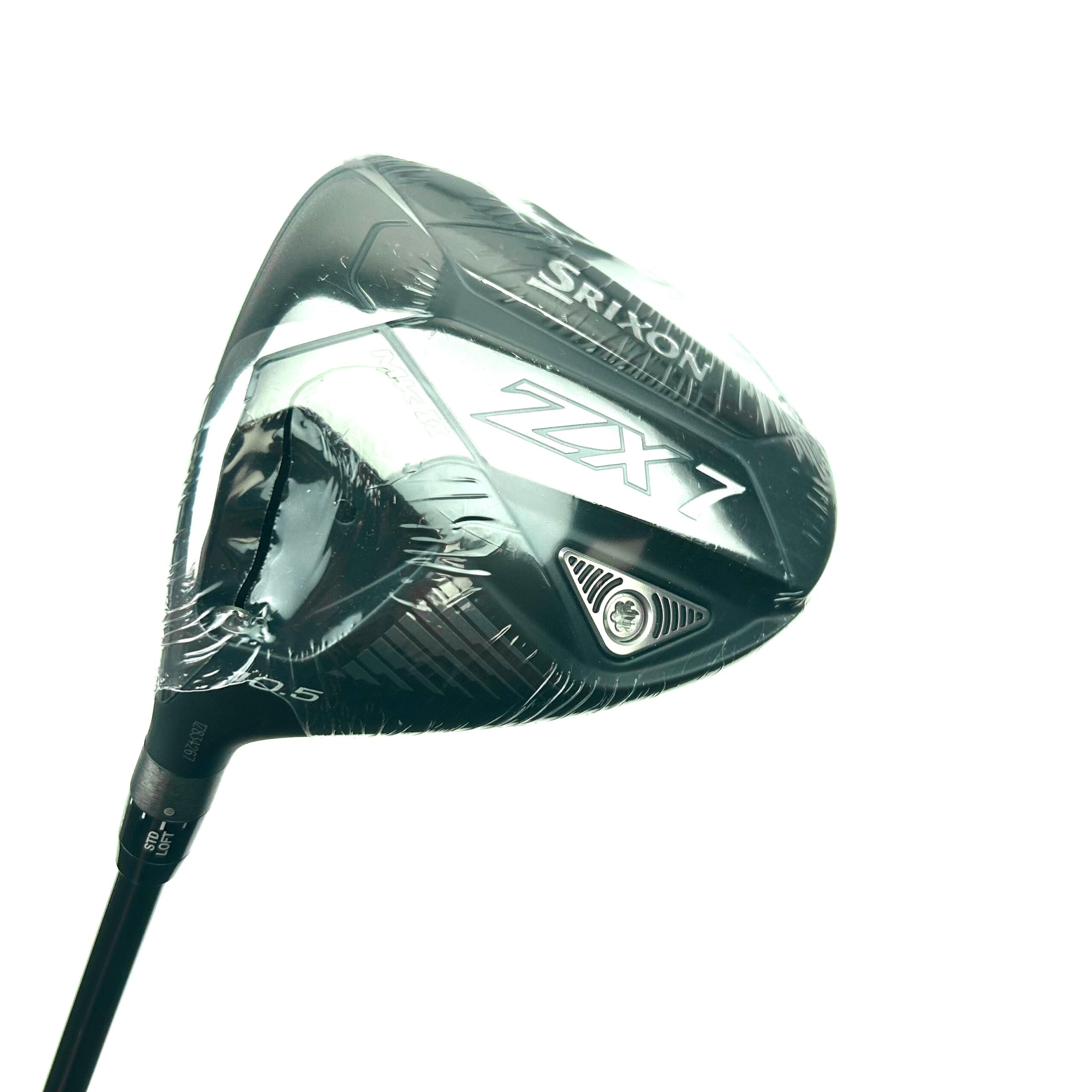
Srixon’s model names cover different fitting priorities. ZX5 Mk II favours forgiveness, ZX5 LS Mk II targets lower spin, and ZX7 Mk II offers more scope to adjust shot shape. The used range gives you access to those choices without having to buy the latest equivalent.
Used listings can include different shaft models, weights and playing lengths within the same driver family. That gives you more than a choice of head. If you already know which shaft characteristics suit you, finding them in an older Srixon may offer better value than changing the shaft in a newer purchase.
Individual photographs and condition grades help you decide whether a cleaner crown matters enough to justify a higher price. Every club is checked before listing and covered by our authenticity guarantee, so you can compare second hand Srixon drivers with a clearer picture of what you are buying.
Every used Srixon driver listed on Nearly New Golf Clubs is inspected before it goes live on the website. That means you can compare condition and specification more clearly when choosing a driver.
Each Srixon driver is reviewed before being uploaded to the website. The head, face, shaft and grip are checked, along with adjustable components where fitted, so the listing reflects the club’s condition as clearly as possible.
We grade every used Srixon driver so you know what to expect before you buy. Whether a club is mint, very good or good, the aim is to make condition easy to understand before it reaches your bag.
Compare Srixon model, generation, loft, shaft model, flex, condition and price. Check the actual listing, because the same head can play differently with another shaft or setting.
You can also compare ladies drivers and left-handed drivers across the available brands and specifications.
Order by 12pm and we will aim to dispatch your Srixon driver quickly, so you can get it into play as soon as possible.
You need to feel comfortable with the club off the tee. That is why we offer 30 day returns, giving you time to make sure your Srixon driver suits your game.
See our delivery information for delivery options and timings.
Srixon’s used prices overlap across generations. You may find a Mk II driver below £150 or a ZXi within a £300 budget, so compare the actual listings before deciding how much you need to spend.
The bands below are a buying guide. Prices, specifications and availability change with stock.
This budget can reach beyond older Z-series models. Listings have included ZX7 Mk II drivers around £120 and ZX5 LS Mk II examples just below £150, providing access to relatively recent designs at a lower cost.
The specification matters particularly at this price. An 8.5° LS head with an extra-stiff shaft may look attractive against its original price, but it is a specific fitting option. It could be difficult to launch if you need more loft or a different shaft.
Check the crown, face, shaft and grip alongside the price. Compare any required changes with the cost of a better-matched listing. A driver that already has suitable loft, length and shaft characteristics can save you more than the lowest asking price.
Prioritise: suitable launch, playable condition and a specification you can use without immediate alterations.
This bracket can provide a choice between Mk II and ZXi models. Current examples include ZX7 Mk II builds around £180, standard ZXi and ZXi LS drivers around £250, and ZXi MAX listings below £300.
Towards the lower end, compare the exact Mk II head and shaft. Moving up the range may bring a newer ZXi design into reach, but choose its role first: standard ZXi for an all-round option with shot-shape adjustment, MAX for forgiveness, or LS when reducing spin is a measured requirement.
Condition can change the comparison too. Two clubs at the same price may have different head grades, shaft specifications or grip condition. Read those separately rather than using the generation as a shortcut for value.
If a less expensive Mk II already produces the carry and dispersion you need, the remaining budget could stay available for another club in your bag.
For the next part of your long game, compare fairway woods, hybrids and driving irons, checking how each fits the carry gaps below your driver.
Prioritise: the right head type, followed by shaft, loft and condition.
A budget above £300 should buy a reason to choose that particular listing. That might be a specific shaft, cleaner condition or a later head design. ZXi examples are available below this level, so the family name alone does not explain a higher price.
Compare the asking price with both a lower-priced used equivalent and the current new price of the same model. Original launch price does not show the saving available today.
If you are paying more for a low-spin build, confirm that it improves carry and direction across normal swings. If the premium is for a shaft, check its complete model, weight, flex and playing length. A familiar shaft brand is not enough to establish that it matches the version you want.
Compare our new golf drivers alongside the used options to assess the current price difference for a suitable specification.
Prioritise: a known specification or a measurable improvement that earns the additional spending.
The original ZX range and the later Mk II generation should be compared separately. Within Mk II, there are three distinct driver designs.
| Mk II model | Main design aim | Weight arrangement |
| ZX5 Mk II | Higher launch and forgiveness | A single rear sole weight |
| ZX5 LS Mk II | Lower spin with a broad head profile | A single forward sole weight |
| ZX7 Mk II | Shot-shape control and a more compact appearance | Interchangeable heel and toe weights |
The LS suffix matters. ZX5 LS Mk II is the dedicated low-spin option in this generation. ZX7 Mk II places more emphasis on workability and flight adjustment.
Start with the flight you want to improve. If mishits lose too much carry, compare a forgiving head first. If measured spin is excessive, investigate an LS option. If you want to refine shot shape, consider the adjustment system alongside your shaft and loft.
The ZXi family changes the naming, but the need to choose the correct role remains.
| ZXi model | Main priority | What the sole weights adjust |
| ZXi | An all-round balance of distance and forgiveness | Heel and toe weights allow shot-shape adjustment |
| ZXi MAX | Stability and forgiveness | A single rear weight adjusts swing weight |
| ZXi LS | Lower-spin performance | Front and rear weights allow spin adjustment |
Standard ZXi and ZXi LS both have two sole weights, but they are positioned to serve different purposes. MAX’s rear weight is not a heel-to-toe draw/fade adjustment system.
Choose the head for the issue you want to address. A MAX head still needs suitable loft and a manageable shaft. An LS head needs enough launch and spin to maintain useful carry.
Earlier models such as the Z585 and Z785 are worth comparing when available. Check their current specification rather than assuming they retain the original shaft, grip or playing length.
An older driver can remain a useful purchase if it fills your requirements. Compare its total cost with a newer used club if you would need to replace components.
The later ZXi RKT family includes standard, MAX and LS models with different flight and forgiveness priorities. RKT is a separate generation, so include that part of the name when comparing specifications and prices.
If one appears in the used range, compare it with the earlier model serving the same role. A newer LS head and an older MAX are different fitting choices, not a straightforward upgrade comparison.
Check the installed weights before making changes. A used club may retain its factory configuration or have been adjusted for its previous owner.
There is a useful detail in Srixon’s ZXi guide: the standard ZXi ships with 10g in the heel and 4g in the toe, which Srixon describes as its standard straight-flight configuration. The heavier weight being in the heel does not, by itself, establish that a used club has been deliberately set up for a draw.
Record both the weight positions and their masses. Moving existing weights changes the distribution of mass. Fitting heavier replacements also changes the overall head weight and feel.
Use the guide for your exact model. Avoid copying settings between ZX7 Mk II, standard ZXi and ZXi LS because their layouts and starting specifications differ.
If your current drives fly low and depend on firm-ground roll, compare a higher-loft option. If they climb and lose distance, establish whether spin, strike or launch is responsible before choosing an LS head.
Judge carry separately from total distance. A flatter shot that rolls further on a dry range may be less useful when you need to carry a bunker or play a soft fairway.
An adjustable hosel gives you fitting options, but it does not make every listed loft equally suitable.
Names such as HZRDUS, Ventus and Denali cover different specifications. Read the complete shaft description, including series, weight and flex, especially if you are paying more for a particular version.
Playing length also deserves attention. Srixon lists the ZX5 LS Mk II at 45.25 inches and the standard ZXi at 45.75 inches. Used examples may have been altered, so confirm the length of the actual club.
A longer build may help some golfers generate speed, but check whether your contact becomes less consistent. Compare the full club over a session rather than choosing from shaft flex alone.
If your current driver head still suits you, compare golf shafts before replacing the complete club, checking adapter compatibility and finished playing length.
If forgiveness is your priority, compare these Srixon options with suitable MAX models in our used Ping drivers range.
The Ping G430 MAX 10K is one alternative designed around high stability, with a fixed rear weight and adjustable hosel.
Compare shaft weight, playing length and loft before judging the heads. Then look at carry retained on your common misses and the width of your landing pattern. The better purchase is the one that gives you more dependable results at a price you are comfortable paying.
If reducing spin is the goal, compare ZXi LS with options such as DS-ADAPT LS among our used Cobra drivers. Both offer a lower-spin design direction, but their complete builds can differ substantially.
Keep loft and shaft characteristics comparable where possible. Check whether reduced spin improves your usual drives, including off-centre contact. A longer best shot is less useful if the rest of the pattern becomes harder to manage.
Our 30 Day Try Before You Buy Guarantee gives you time to use the club at the range or on the course. Read the terms, then compare it with your current driver across more than one session.
Record the hosel position, fitted weights and playing length. Keep those settings unchanged for the first comparison.
Use the same ball type and target. Warm up, then alternate short sets with your current driver so that fatigue or a changing swing does not favour one club.
Record both where possible. If an LS driver gains total distance through additional rollout, consider how often your home course provides those conditions.
Pay attention to the carry you need over hazards. That number should remain dependable beyond your best strikes.
Keep dry and damp sessions separate in your notes. Srixon’s ZXi face milling is designed to help stabilise spin in wet conditions, but that does not make weather irrelevant to your comparison.
On the course, assess whether the driver leaves you in better positions to play the next shot. Change one hosel or weight setting at a time, and retain a record of the original setup.
Review the head, shaft and grip grades separately. NNGC’s condition scale explains the expected signs of use, including cosmetic face, sole and crown marks on Fair-condition clubs.
For a Srixon driver, check the crown, face, shaft finish and adjustable components. Confirm the playing length, grip size and any included headcover or wrench in the listing.
Sole scuffs and marks visible at address may matter differently to you. Use the photographs to decide which cosmetic trade-offs you are comfortable accepting.
Read our full condition guide before choosing between grades.
For help comparing head designs, lofts or shafts, book an online golf club consultation. Browse the used Srixon drivers above to compare current specifications, condition and prices.
Need a different build? Explore our ladies drivers and left-handed drivers.
Replacing an existing club? You can sell your golf clubs to Nearly New Golf Clubs.
We offer a 30 day money back guarantee on all used clubs, meaning you can try before you buy.
We offer a next working day delivery service. Place your order by 12pm and we'll deliver it then next working day.
The authenticity of our products are verified by our professional team before we bring them into stock.