



Shop Quality Second Hand Titleist Golf Drivers
Book your Club Trial & Fitting Session : Book now
 30 Day Try Before You Buy Guarantee
 Order by 12pm for next working day delivery
 Authenticity Guaranteed
RRP: £599.00
View details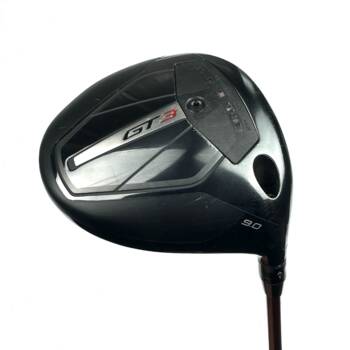
RRP: £599.00
View details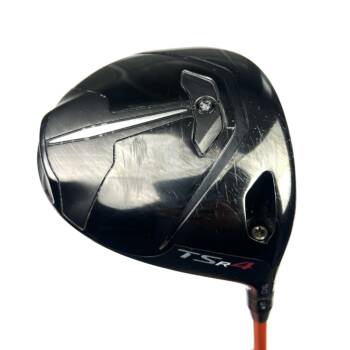
RRP: £529.00
View details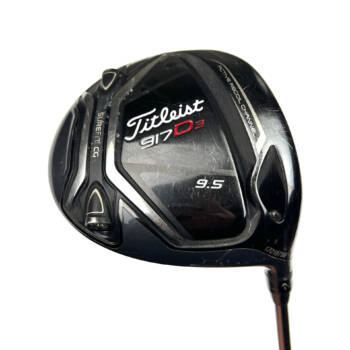
RRP: £449.00
View detailsShop used Titleist drivers for a choice of forgiving, lightweight and lower-spin designs at second hand prices. From earlier TS and TSi models to TSR, GT and GTS, our changing range gives you options for improving your tee shots without buying the newest driver.
Compare the head, loft, shaft and condition to find a suitable build. Every used driver is checked and graded before listing, backed by our authenticity guarantee and 30 day returns.We also stock a wide range of second hand Titleist golf clubs, including fairway woods, irons, hybrids, driving irons, Vokey wedges and Scotty Cameron putters.Browse the Titleist drivers below, or explore all used golf drivers to compare brands.Buying second hand gives you access to Titleist’s previous generations at a lower budget than a recent release. A suitable TSi or TSR can leave more room for the shaft, loft and condition you want.
Compare the complete club when judging the saving. A newer head with an unsuitable shaft may cost more to put right than an older driver that already matches your needs.
Titleist drivers cover more than compact, low-spin designs. TSR2 and GT2 emphasise performance across the face, while the GT1’s lightweight configuration offers another route for golfers seeking easier launch.
That gives you options whether your contact varies, your current driver feels heavy or you struggle to produce useful height. Choose by those needs rather than assuming Titleist is only for low-handicap golfers.
If a particular Titleist shaft and loft have worked for you, the used range can help you replace a familiar driver or compare another generation.
SureFit adjustment also gives you scope to refine a promising club. Record the settings of your current driver before shopping, including any adjustable weight position. That makes it easier to identify what you want to keep and what you want to change.
Condition grades help you balance appearance and price. You might prefer a cleaner crown because marks distract you at address, while being comfortable with normal play marks on the sole.
Compare the individual photographs and separate head, shaft and grip ratings. Paying more for a preferred cosmetic grade is a personal choice; it should be considered separately from paying for a different specification.
Every used Titleist driver listed on Nearly New Golf Clubs is inspected before it goes live on the website. That means you can compare condition and specification more clearly when choosing a driver.
Each Titleist driver is reviewed before being uploaded to the website. The head, face, shaft and grip are checked, along with adjustable components where fitted, so the listing reflects the club’s condition as clearly as possible.
We grade every used Titleist driver so you know what to expect before you buy. Whether a club is mint, very good or good, the aim is to make condition easy to understand before it reaches your bag.
Compare Titleist model, generation, loft, shaft model, flex, condition and price. Check the actual listing, because the same head can play differently with another shaft or setting.
Order by 12pm and we will aim to dispatch your Titleist driver quickly, so you can get it into play as soon as possible.
You need to feel comfortable with the club off the tee. That is why we offer 30 day returns, giving you time to make sure your Titleist driver suits your game.
Titleist prices overlap across generations. A particular shaft, loft or condition grade can place an older model alongside a newer one.
Use these bands to narrow your search, then compare the specifications available. Stock and prices change, so the examples below are a guide rather than a fixed price list.
This bracket can include 910, 913 and 915 drivers, alongside selected TS and TSi examples. Recent listings have included 913 D3 drivers around £80–£95, 915 D2 examples around £100–£120, a TS3 around £130 and a TSi1 around £110.
Those clubs represent different buying choices. A low-loft TS3 with a stiff shaft should be assessed differently from a lightweight TSi1.
Prioritise:
An inexpensive older driver can suit a first setup or replace a familiar club. If you already own something similar, identify what the replacement would improve before buying.
This bracket can bring TSi, TSR and some GT drivers into the same comparison. Recent listings have included a TSi2 around £210, TSR3 examples around £220–£230 and a GT2 around £280.
That overlap makes the head type more useful than release year alone. A TSR3 with a suitable shaft may be preferable to a newer GT2 for one golfer, while another will value the GT2’s emphasis on forgiveness.
At this budget, compare:
Lower-spin models can also appear here. A TSR4 at an attractive price still needs to produce enough height and carry for your swing. Its specialist design does not make it an automatic upgrade from a TSR2.
This bracket can include recent GT and GTS builds, cleaner examples and clubs fitted with particular shafts.
The extra spend should buy something you value: a tested head and shaft combination, a preferred condition grade or an adjustment feature that helps your flight.
For example, GTS adds new weighting options, while GTS4 changes to a larger head than GT4. Those differences are worth considering if they address a limitation in your current driver. They do not establish how much further you will hit it.
Compare the used price with the current new price of an equivalent build, as well as with previous-generation alternatives. A premium shaft only adds playing value when its weight, feel and performance suit you.
The numbers identify different designs within a generation. They are not handicap categories or a ranking from basic to advanced.
| Model type | Broad starting point | Examples | What to assess |
|---|---|---|---|
| 1 | Easier launch, often with a lightweight build | GT1 | Whether the complete club helps you generate speed and height |
| 2 | Speed and forgiveness across the face | TSR2, GT2, GTS2 | Carry and direction when contact varies |
| 3 | More targeted control through adjustable weighting | TSR3, GT3, GTS3 | Whether the weight settings suit your strike pattern and flight |
| 4 | Greater spin reduction | TSR4, GT4, GTS4 | Whether lower spin improves distance while retaining useful carry |
The details change between generations. GT4 has a compact 430cc head, for example, while GTS4 moves to 460cc. Always read the complete model name.
Earlier generations offer a way to compare Titleist without committing to a recent-model budget. Focus on the complete specification and condition of each listing.
Avoid treating an older D2 or D3 as identical to a modern 2 or 3 model. Head shapes, weight systems and fitting options have changed.
If you are replacing a driver you already like, record its loft, shaft and playing length first. That gives you a useful reference when comparing alternatives.
The Titleist TSR driver range offers three distinct starting points.
TSR2 drivers are worth comparing if your impact location varies. TSR3 adds an adjustable centre-of-gravity track, allowing the head’s weighting to be tuned around your strike pattern. TSR4 focuses on reducing spin.
A consistent strike location can make targeted adjustment useful. If your contact moves widely across the face, assess how much distance and direction you retain on those misses before choosing.
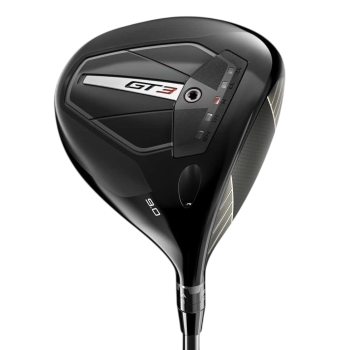
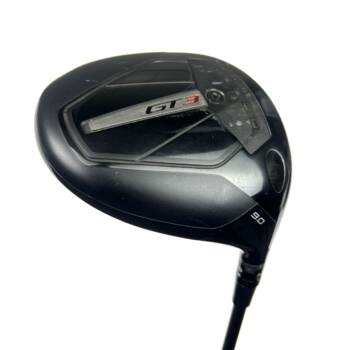
Within the Titleist GT driver range, GT1 offers a lightweight configuration for easier launch. GT2 prioritises speed and forgiveness across the face, while GT3 provides a precisely adjustable weight track.
GT4 combines a compact 430cc head with front and rear weighting options for lower-spin fitting.
The shape behind the ball is part of the decision. Compare how comfortably you aim the club, then check whether the launch and dispersion support that confidence.
GTS introduces a dual-weight system across the driver family. GTS2 uses front and rear weight positions. GTS3 and GTS4 combine a forward adjustable track with a rear weight.
GTS2 is the starting point for stability across the face. GTS3 offers more targeted control, while GTS4 remains the strongest spin-reducing option within the family.
GTS4’s move to 460cc is a meaningful difference from GT4. If you previously ruled out a 4 model because you disliked its compact appearance, compare the newer shape before applying the same judgement.
Look at the complete build, particularly when considering a GT1 or another lightweight configuration.
A lighter head paired with a heavier replacement shaft may feel different from the original specification. Grip weight and playing length also contribute to the club you receive.
Tell us what you find difficult with your current driver. “It feels heavy late in the round” or “I struggle to get enough height” gives us more to work with than choosing by age or handicap alone.
SureFit uses a numbered sleeve and lettered ring to provide 16 loft and lie combinations. Check both characters when recording a setting.
The standard position is A1 for right-handed drivers and D4 for left-handed drivers. Use the correct chart for your handedness, as the same setting code does not have the same meaning on both charts.
Start with a suitable head and shaft, then use adjustment to refine the result. Test loft and lie changes methodically rather than assuming one setting will cure a slice.
Use Titleist’s official SureFit guide for the adjustment chart and tool instructions.
Check the shaft’s full model, weight and flex. Two shafts marked “stiff” can offer different weight and feel, and a used club may no longer have its original shaft.
Playing length deserves attention too. Confirm the finished club length if you are replacing a known setup or considering a shorter build.
On adjustable heads, identify the fitted weights and their positions. These can affect the feel and flight of the club. Additional weights, a wrench and a headcover should only be assumed included when the listing says so.
The GT280 offers a different option for golfers looking for an alternative tee club. Its 280cc head, 13° loft and standard 43.5-inch playing length place it between a conventional driver and a fairway wood.
Compare it with the club you use on tighter holes. Does it improve accuracy while retaining enough distance? If you also intend to use it from the fairway, test that shot separately.
One detail matters if you plan to reuse a shaft: GT280 uses Titleist’s fairway SureFit sleeve, so do not assume your driver adapter will fit.
Browse our used mini drivers to compare the available options.
Choose comparable head types before judging one brand against another. A forgiving Titleist and a compact low-spin alternative are trying to solve different problems.
A TSR2 or GT2 is worth comparing with a Ping G430 MAX 10K if your priority is keeping off-centre strikes playable.
Assess the carry you lose on mishits, the width of your landing pattern and how the shaft feels through a full session. Head shape and sound may influence your preference, but your normal shots should decide the result.
Explore used Ping drivers for available alternatives.
A GT4 and TaylorMade Qi35 LS both deserve consideration when reducing spin is the goal, but their profiles differ. GT4 has a 430cc head, while Qi35 LS is 460cc.
Compare launch and carry across a set of drives, including imperfect contact. The useful question is whether the lower-spin flight improves your tee shots without making the common miss more costly.
Browse used TaylorMade drivers to compare suitable specifications.
Use our 30 Day Try Before You Buy Guarantee to compare the driver with your current club at the range and on the course.
Photograph the SureFit sleeve and ring, then record any adjustable weight positions. Check the shaft, loft and playing length against the listing.
Begin with the supplied configuration so you have a clear reference. If you later change a setting, record what changed and how the ball flight responded.
Warm up, then alternate small groups of shots between your current driver and the Titleist. Keep the ball, tee height and target consistent.
With a launch monitor, compare typical carry and dispersion across the set. Without one, use a target corridor and note how often each driver finishes inside it. Include mishits when judging the result.
Test a hosel change separately from a weight change. If you alter both together, it becomes harder to identify what helped.
Use the instructions and tool for the exact model. Keep your starting configuration recorded so you can return to it.
A driver needs to work on the holes you play. Look at whether it clears your usual carries, reduces penalty shots or leaves a more predictable approach.
A few extra yards on your best strike matter less if your common miss becomes harder to manage.
Read our condition guide to understand the separate ratings for heads, shafts and grips.
Compare the photographs of the individual Titleist driver. Look at crown marks visible at address, normal face and sole wear, shaft markings and grip condition.
A lower cosmetic grade may suit your budget if the appearance does not bother you. It does not tell you whether the loft or shaft fits your swing, so assess condition and specification separately.
Check the product description for any supplied headcover, wrench or additional weights.
Browse the used Titleist drivers above to compare current prices, specifications and condition. For a different build, explore our ladies drivers and left-handed drivers.
Replacing an existing club? You can sell your golf clubs to Nearly New Golf Clubs.
We offer a 30 day money back guarantee on all used clubs, meaning you can try before you buy.
We offer a next working day delivery service. Place your order by 12pm and we'll deliver it then next working day.
The authenticity of our products are verified by our professional team before we bring them into stock.