



 30 Day Try Before You Buy Guarantee
 Order by 12pm for next working day delivery
 Authenticity Guaranteed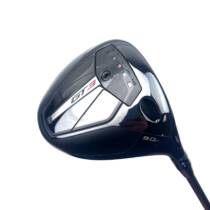
Titleist GT Drivers
Shop used Titleist GT drivers built for fast ball speeds, forgiveness and confident distance off the tee. Each driver is inspected, clearly graded and ready to help you find more fairways and maximise performance without paying new prices.
Read more...Read less...
Why Choose a Used Titleist GT Driver
The Titleist GT driver range is built for golfers who want modern ball speed, a clean Titleist look and a choice of head styles.
Across models such as GT1, GT2, GT3 and GT4, the range gives players options between easier launch, all-round forgiveness, adjustable flight control and lower-spin performance.
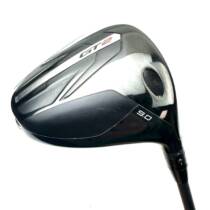
The GT2 Driver is the broadest all-round option, designed for golfers who want speed and forgiveness in a traditional-looking Titleist head.
Compared with an older driver, a Titleist GT Driver can give many players more stable ball speed, better forgiveness and a clearer model choice.
It is a useful option for golfers who want one of Titleist’s newest driver ranges, provided the listed loft, shaft, flex and condition suit the player.
Club Specs
Release Year: 2024, with GT1 added in 2025
Player Type: golfers wanting modern Titleist driver performance, ball speed and model options for forgiveness, adjustability or lower-spin control
Forgiveness Level: mid to very high, depending on model
Typical Handicap Range: a broad range of golfers, with GT1 and GT2 offering the most help, GT3 suiting players who want adjustability, and GT4 better for low-handicap golfers and better ball strikers
Key Benefit: modern Titleist speed, clean shaping and four head options for different launch, spin and forgiveness needs
Common Lofts: 8°, 9°, 10.5° and 12° depending on model and availability
Is this the right model for you?
The Titleist GT Driver suits players who want a premium modern driver with a clean look at address and several head options.
It is a good fit for golfers who want Titleist feel and shaping, while still having enough model choice to match different launch, spin and forgiveness needs.
The GT1 model is best for golfers who want lighter-feeling speed, easier launch and extra help getting the ball airborne.
The GT2 model is the best all-round option. It suits golfers who want a strong balance of distance, forgiveness and a confidence-inspiring head shape.
The GT3 model is better for golfers who want more adjustability and control over flight. It suits players who like to fine-tune launch, spin and shot shape.
The GT4 model is aimed more towards low-handicap golfers and better ball strikers who want a smaller head, lower spin and a more penetrating flight.
Golfers choosing between GT driver models should focus on the listed loft, shaft, flex and condition. The right model depends on whether you want easy launch, all-round forgiveness, adjustability or lower-spin control.
Key Features of Used Titleist GT Drivers
Titleist GT drivers are designed around ball speed, stability and a refined Titleist shape. The GT range introduced a new crown construction to help save weight and improve how mass is positioned within the head.
This matters in a driver because better weight placement can help support launch, spin and forgiveness without making the head look oversized or unusual at address.
The face and head construction are designed to keep ball speed strong while preserving the clean Titleist feel many golfers prefer.
The GT2 and GT1 models give the most help, while GT3 and GT4 give players more control over flight and spin. This makes the range easier to fit across different swing types.
Titleist’s SureFit hosel gives players scope to fine-tune loft and lie settings, helping match the driver to a preferred launch window and shot shape.
How this model compares to others
How does the GT compare to older models
GT followed TSR with a newer construction story, more refined head options and a wider range thanks to GT1, GT2, GT3 and GT4.
Golfers moving from older Titleist drivers may notice better stability, more model choice and stronger performance on mishits.
How does the GT compare to similar models
Against other premium drivers from the same period, GT is a clean-looking, performance-focused Titleist range.
GT2 is the safest all-round choice, GT1 helps launch, GT3 adds adjustability and GT4 is the lower-spin option for better players.
Condition ratings
Mint – Excellent overall condition with only very light signs of use.
Good – Used, well looked after and still in great shape.
Fair – Good usable condition with more obvious cosmetic wear.
Well used – Heavier signs of use, but still suitable where the rating and price reflect this.