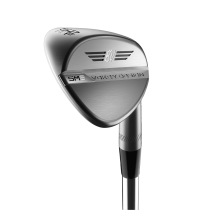



Shop Quality Second-Hand Lob Wedges

Book your Club Trial & Fitting Session : Book now
 30 Day Try Before You Buy Guarantee
 Order by 12pm for next working day delivery
 Authenticity Guaranteed
A lob wedge helps the ball rise quickly when you need to clear a bunker, slope or other obstacle with limited green beyond it.
The additional loft creates a steeper landing angle, helping shorter shots finish with less forward movement.
A lob wedge can give you another trajectory for short-sided pitches, bunker shots and open-face shots that are difficult to create with a lower-lofted wedge.
Buying used can give you access to different bounce, grind and sole designs without paying the original new-club price.
Every used lob wedge listed on Nearly New Golf Clubs is inspected before it goes live on the website. That means you can browse with a clearer view of condition, specification and price before choosing the wedge that suits your short game.
Each lob wedge is reviewed before being uploaded to the website. The face, grooves, sole, leading edge, shaft and grip are checked so the listing reflects the club’s condition as clearly as possible.
We grade every used lob wedge so you know what to expect before you buy. Whether a wedge is mint, very good or good, the aim is to make condition easy to understand before it reaches your bag.
Compare loft, bounce, grind, shaft, condition and price. Check the wedge against the clubs already in your bag so it adds a short-game option or distance you do not already have.
Left-handed golfers can browse our used left-handed golf wedges, while golfers looking for ladies-flex options can explore our used ladies golf wedges.
Order by 12pm and we will aim to dispatch your wedge quickly, so you can get it into play as soon as possible.
You need to feel confident with your wedge on the course. That is why we offer 30 day returns, giving you time to make sure the loft, sole and overall setup suit your game.
A lob wedge is a high-lofted wedge designed for shorter shots where height and a steep landing angle matter more than distance.
It is most commonly used around the green for pitches, bunker shots and situations where you need the ball to clear an obstacle and stop with less rollout.
Compared with a sand wedge, a lob wedge normally has more loft and produces a higher, shorter flight.
Most lob wedges sit around 58 to 60 degrees.
A 58 degree wedge gives you high launch while retaining slightly more distance and versatility.
A 60 degree wedge gives you more loft and a steeper landing angle, making it the more specialised option.
Higher-lofted wedges such as 62 or 64 degrees also exist, but they are less common and suit more specific short-game needs.
For most golfers, the main decision is between 58 and 60 degrees.
Not every golfer needs one.
A lob wedge earns its place when it gives you a shot that your sand wedge cannot produce comfortably.
It can be useful if you regularly face:
If your 54 or 56 degree wedge already covers those situations, you may not need another club.
The purpose of a lob wedge is to add a useful trajectory, not simply another loft number.
A sand wedge and lob wedge normally have different roles.
A sand wedge generally has less loft and is more versatile for:
A lob wedge generally gives you:
Many golfers carry both because they create different trajectories.
If you only want one high-lofted wedge, the sand wedge is normally the more versatile choice.
Yes, in many situations.
Opening the face of a 54 or 56 degree wedge can add loft and create a higher shot.
Whether that works well depends on the bounce, grind, lie and your technique.
A lob wedge becomes useful when you regularly need that extra height and would rather have it built into the loft than create it by manipulating a lower-lofted club.
This is the main loft decision.
A 58 degree lob wedge generally gives you:
A 60 degree lob wedge generally gives you:
Choose 58 when you want one high-lofted wedge to cover a wider range of jobs.
Choose 60 when maximum height is something you expect to use regularly.
Usually not.
The two lofts are close enough that they can produce overlapping distances and trajectories.
Most golfers gain more from choosing the one that fits the rest of the wedge setup best.
For example:
50° → 54° → 58°
or
52° → 56° → 60°
both create clear four-degree spacing.
Carrying both 58 and 60 only makes sense when they have deliberately different bounce, grind or short-game roles.
Replacing more than one club? Browse our used golf wedge sets to compare ready-made loft combinations.
There is no universal lob-wedge distance.
Carry depends on loft, swing speed, strike, shaft, head design and how full a swing you make.
At this end of the bag, controlled partial distances are often more useful than maximum full-swing yardage.
Measure your own:
Then compare those distances with the wedge below it.
The lob wedge should give you useful shorter scoring options rather than duplicating another club.
You can, but you do not have to.
The high loft produces a very high flight, and small changes in strike can create noticeable differences in distance.
If full swings with the lob wedge are inconsistent, use a lower-lofted wedge for the longer shot and keep the lob wedge for the shorter situations where its height is useful.
Bounce affects how the sole moves through turf and sand.
Lower bounce can suit firm turf, tight lies and shallower swings.
Mid bounce offers a balance of versatility across different conditions.
Higher bounce can suit softer ground, soft bunkers and steeper swings.
The stated bounce number is only part of the picture. Sole width and grind also influence how the club behaves.
Lob wedges are often played with the face opened or altered, so sole shape becomes particularly important.
Heel or trailing-edge relief can help the club sit lower when the face is opened.
A fuller sole provides more support when the club is played square and can help through softer turf and sand.
Think about whether you normally play the face square or change the face angle regularly around the green.
It can be useful, but it is not essential.
For many newer golfers, learning several short-game shots with a forgiving 54 or 56 degree wedge is a simpler starting point.
A lob wedge becomes more useful when you can identify specific shots where the extra loft would help.
If you do choose one, a forgiving sole and suitable bounce may matter more than selecting the most specialised grind.
Use the 30 day return period to see whether the lob wedge gives you a short-game option worth carrying.
Check:
If it does not give you a clear trajectory or short-game option beyond the wedge below it, the extra club may not be earning its place.
Every used lob wedge is individually checked and graded so you know what to expect before you buy.
Mint condition wedges show minimal signs of use. They may have been hit only a few times, if at all.
Faces and grooves: little to no visible strike wear
Soles: clean with minimal marks
Heads: little to no cosmetic marking
Shafts and grips: close to new condition
Very good condition wedges show light use but remain clean overall.
Faces and grooves: light strike marks
Soles: small marks from limited play
Heads: minor cosmetic marks may be visible
Shafts and grips: very good condition with light signs of use
Good condition wedges show normal signs of play but remain fully usable.
Faces and grooves: visible wear from regular use
Soles and heads: normal cosmetic marking may be present
Shafts: possible light bag wear
Grips: usable or replaced where needed
Cosmetic wear does not stop a wedge performing. A well-graded second hand lob wedge can still deliver strong launch and short-game control when the loft, bounce and grind suit your game.
We offer a 30 day money back guarantee on all used clubs, meaning you can try before you buy.
We offer a next working day delivery service. Place your order by 12pm and we'll deliver it then next working day.
The authenticity of our products are verified by our professional team before we bring them into stock.