


 30 Day Try Before You Buy Guarantee
 Order by 12pm for next working day delivery
 Authenticity Guaranteed
What Is a Fairway Wood? A Beginner’s Guide to Types, Lofts and Uses
A fairway wood is a golf club used for longer shots from a tee or fairway. It has a smaller head, a shallower face and a shorter shaft than a driver. Common types include 3, 5, 7 and 9 woods, with different lofts and lengths to suit different shots.
The name can be misleading when you are starting golf. You can use one away from the fairway, including from a tee, and they are no longer made from wood! The name comes from the material historically used for this family of clubs.
How to recognise a fairway wood
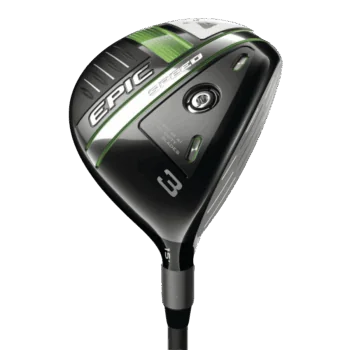
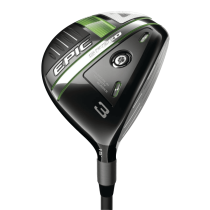
Look for a rounded head attached to a long shaft, with a number or loft marking usually visible on the sole. The main parts are:
- Head: the complete hitting end of the club.
- Face: the front surface that meets the ball.
- Sole: the underside of the head, which interacts with the ground.
- Crown: the top of the head, visible when you address the ball.
- Shaft: the section connecting the head to the grip.
Loft describes the angle of the face. The number printed on the head helps identify the model’s stated loft, although an adjustable club may be set differently. The loft you deliver at impact also depends on your swing.
What do 3, 5, 7 and 9 wood mean?
The numbers identify types of fairway wood. Within a model family, moving from a 3 wood towards a 9 wood usually means more loft and a shorter standard shaft.
A 3 wood is the more traditional option, it is generally a longer-shot option and apart from your driver, the longest club in the back. A 5 wood offers another combination of length and loft, while 7 and 9 woods provide higher-lofted alternatives, they have recently become very popular on tour due to how easy they are to get the ball airborn and stop quickly.
The numbers are category labels, rather than fixed specifications. Two brands can give their 5 woods with slightly different lofts, and different versions from one brand can differ too. A number does not guarantee a particular distance.
Fairway wood loft chart: one manufacturer’s example
This chart uses PING’s G430 MAX family to show how the progression works. These are PING’s published design specifications:
| Club | Published loft | Standard length |
| G430 MAX 3 wood | 15° | 43 in |
| G430 MAX 5 wood | 18° | 42.5 in |
| G430 MAX 7 wood | 21° | 42 in |
| G430 MAX 9 wood | 24° | 41.5 in |
Source: PING G430 MAX fairway specifications. All lengths above describe the selected standard builds. Use the chart to understand the pattern, then check the individual model you are considering. Matching a loft number alone does not establish how two clubs will perform.
When would you use a fairway wood?
Choose the club around the shot. Check the lie, required carry, landing space and where your usual miss would finish. The following situations are illustrations, rather than customer results or tested recommendations.
A tee shot with a defined landing area
Imagine a hole where your aim is to reach a broad landing area before the fairway narrows. A fairway wood may provide a useful option if its normal distance and shot pattern fit that space.
Yes, you can use a 3 wood from a tee. Our team hears that question from beginners. It does not automatically mean a straighter shot than driver, though some golfers do find the shorter shaft easier to control than a driver.
A long approach from a suitable fairway lie
Imagine that the ball is sitting cleanly on the fairway and the green is beyond the useful carry of your shorter clubs. A fairway wood may help cover the distance if you can launch it reliably.
Check whether the ball needs to carry a bunker and how much room there is to land. A shot that reaches the green only after a long roll may not serve the same purpose as one that carries onto it.
A lay-up where a shorter club makes sense
Imagine a long hole with trouble near the landing area of your longest fairway wood. Trying to get as close as possible could bring that trouble into play.
A shorter club may leave a clearer next shot. You do not need to use a fairway wood because there is a long distance remaining. From thick rough or a difficult slope, assess whether clean contact is realistic before choosing it.
Fairway wood, driver or hybrid?
These clubs can all be used off the tee, but their shapes and builds differ. The table gives a general orientation; the individual club and your results take precedence.
| Club type | Head shape | Usual length relationship | Typical purpose |
| Driver | Larger, deeper head | The longest club in the bag | Longer shots from a tee |
| Fairway wood | Rounded head, shallower face than driver | Generally shorter than driver and longer than a comparable hybrid | Longer shots from a tee or turf |
| Hybrid | More compact head | Usually shorter than a comparable fairway wood | Long-game alternative that can be used from the tee, turf or rough |
A 3 hybrid is not a 3 wood. The shared number does not mean the same loft, length or distance. Compare the full specification and the shot each club gives you.
Which fairway wood should a beginner try?
Start with the shot you need help with. While 3 wood in theory will provide you with the most distance, in reality for a beginner, that may not necessarily be the case.
Low loft needs high clubhead speed to generate the height and backspin that create carry. At slower clubhead, the ball comes off a 3 wood too low and with too little spin, it may be hard to get airborn and falls out of the sky early. A 5 wood (18°) or 7 wood (21°) launches higher and spins more, which keeps the ball in the air longer. For a slower swinger that extra carry beats the theoretical distance advantage of the lower loft.
3 wood has a shallow face and a longer shaft. That can make the controlling the clubhead harder than a 5 or 7 wood, with more loft and shorter shafts.
Our recommendation in general would be to start with more loft, a 5 wood is a good place to start. It gives you more loft than a 3 wood, and will tend to fit inbetween your driver and lowest iron better than a 7 wood. From there, and as you play more, depending on the course you playing and what you’re looking from for your fairway wood will dictate your next club.
What should you check when buying used?
Once you have identified a useful role, check the individual listing. Manufacturer specifications describe an original design; the listing needs to describe the club you will receive.
- Model and generation: check the product information for exact specs.
- Handedness: dexterity means whether the club is for a right-handed or left-handed golfer. It may sound silly, but it’s an easy mistake to make! Ensure you pick the right handedness for you.
- Shaft and length: check the actual shaft model, flex and playing length.
- Condition: use photographs of the individual face, crown, sole, shaft and grip alongside its condition grade.
- Budget: compare the specification and condition you need within what you can spend.
Shaft flex is one detail beginners ask us to explain. It describes a shaft’s bending characteristics, rather than being a direct measure of swing speed. Weight, profile and your delivery also matter, so avoid choosing from a flex label or your age alone. As a rule of thumb, we’d recommend a new beginner to start with a regular flex, and then they can upgrade from there.
Whatever fairway wood you’re looking for, compare used 3 woods, browse used 5 woods or higher-lofted used 7 woods and if you have any questions, feel free to reach out to the team for help.
Frequently asked questions
Is a fairway wood the same as a driver?
No. A driver has the biggest head in the bag, up to 460cc, and the longest shaft. Loft is usually between 9° and 12°, and it’s built for one job: maximum distance off the tee. A fairway wood has a smaller, shallower head and a shorter shaft, which means you can hit it off a tee and also straight off the fairway.
Can you hit a fairway wood from a tee?
Yes, and lots of golfers choose to do so on tigher holes. The shorter shaft makes it easier for many golfers to find the middle of the face. It won’t automatically be straighter, though. If you slice your driver, you’ll probably slice your 3 wood too, just not quite as far. Tee it low so the ball sits just above the grass.
Is a hybrid a fairway wood?
No, though they’re close relatives. A hybrid has a more compact head and a shorter shaft, so it sits somewhere between a fairway wood and an iron. Many golfers use hybrids instead of long irons because they’re easier to launch and handle the rough better and may choose to have both a fairway wood and hybrid in the bag. However, some woods and hybrids will do a similar job, so choosing between both will come down to personal preference.
Does every 5 wood have the same loft?
No. The number on the sole is a rough guide, not an industry standard. Most 5 woods sit around 18° to 19°, but it varies by brand and model. Many modern woods also have adjustable hosels that move the loft a degree or two either way.
Do beginners need a 3 wood?
Not usually. A 3 wood is one of the hardest clubs in the bag to hit well, especially off the fairway. Most beginners get more height and carry from a 5 wood, and often hit them just as far. Build your bag around the clubs you hit consistently, then add a 3 wood once your swing speed and contact justify it.
Find a fairway wood with a useful job
Once you know the shot you want to add, browse our used fairway woods to compare lofts, shafts, handedness and condition. Take your current clubs and normal carry distances into the decision so the next club adds something useful to your bag.